
Ceramic Fiber Textiles
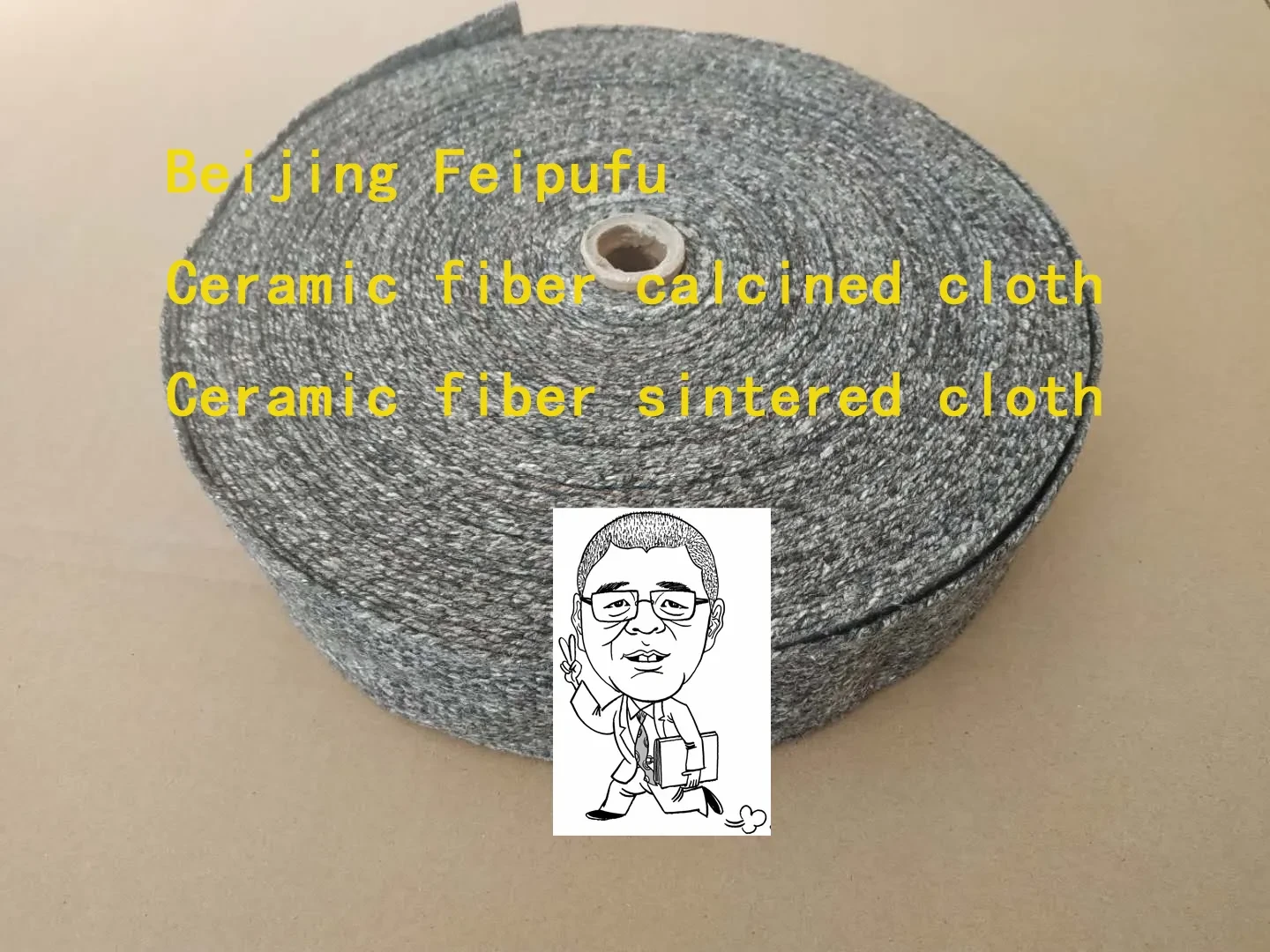
Sintered Fiber Cloth
Code prefix SC
Sintered fiber cloth is made by heat treating greige cloth: glass fiber cloth, ceramic fiber cloth or bio-soluble fiber cloth. The treatment carbonises the dyes and other organic components in the greige, so the finished cloth releases far less smoke and odour when it first meets heat. The base cloth determines the temperature class, and the ceramic version reaches 1000 C continuous with a 1260 C peak.
- Continuous
- 1000°C
- 1832 °F
- Short peak
- 1260°C
- 2300 °F
- Construction
- Wire reinforced
- SC
Spec sheets are issued against the confirmed grade, with the test method named on the report.
01 — Product description
Product description
High-temperature resistant fiber sintered cloth is made by heat treating greige cloth of glass fiber, ceramic fiber or bio-soluble fiber. The heat treatment carbonises dyes and other organic components in the greige, so the product emits little smoke in service. The greige cloth can be processed into sintered cloth, sintered tape and other forms to suit different working conditions.
High-temperature resistant fiber sintered cloth is made from high-temperature resistant fiber greige cloth such as fiberglass cloth, ceramic fiber cloth, and biosoluble fiber cloth through high-temperature heat treatment. High-temperature heat treatment can carbonize dyes and other organic components inside the greige cloth, resulting in low flue gas emissions during product use.
The product has low thermal conductivity, thermal shock resistance, and flexibility, and can be used in industrial high-temperature protection, thermal insulation, and electrical insulation scenarios. High-temperature resistant fiber greige cloth can be processed into different product forms such as sintered cloth and sintered tape, adapting to different working conditions.
Product parameters
| Item | Parameter |
|---|---|
| Weight | 400~1600 g/m² |
| Thickness | 0.16~3 mm |
| Use temperature | 500°C~1000°C |
| Conventional roll length | 30 m, 50 m, 100 m, 200 m |
Working condition suitability and restrictions
Fiberglass sintered cloth has a continuous use temperature not exceeding 500°C and a short-term use temperature not exceeding 550°C. Ceramic fiber and soluble fiber sintered cloth have a continuous use temperature up to 1000°C. Load, airflow erosion, and corrosive atmosphere will reduce the actual use temperature.
The product is suitable for dry, static thermal insulation, high-temperature protection, and electrical insulation conditions. It is not suitable for conditions involving strong acid or alkali corrosion, long-term liquid immersion, high-speed medium erosion, or high-frequency severe friction.
Usage precautions
- Cutting and processing of fiber material products generate fiber dust. During operation, ensure ventilation and dust protection, and dispose of waste in accordance with local environmental regulations.
- Use temperature should be matched according to base cloth material. Over-temperature and over-working-condition use are prohibited to avoid material shrinkage, powdering, and failure.
- During use, regularly inspect the product. In case of hardening, damage, or powdering, replace promptly.
- All technical data are for reference only. Actual performance depends on usage conditions. Users should conduct their own suitability testing and comply with relevant safety regulations and standards.
');
02 — Characteristics
Organic content removed
Sintering drives off the sizing and dye that would otherwise burn in service, which is what cuts the smoke on first heat.
Three base cloths
Glass, ceramic and bio-soluble greige can all be treated, so the same finish is available across the temperature range.
Cleaner in clean processes
Used where smoke or volatile carry-over is unacceptable: semiconductor, coating and heat treatment equipment.
Firmer hand
The treated cloth is stiffer than greige and creases more sharply, so the fold lines should be designed rather than forced.
03 — Typical properties
Values typical, confirm against duty
| Test item | Value | Note |
|---|---|---|
| Base cloth | Sets the class | |
| Continuous, ceramic | SUS304 reinforced base | |
| Short excursion | Ceramic base | |
| Treatment | Dye and organics carbonised | |
| Weight | By base cloth | |
| Thickness | By base cloth | |
| Roll length | Conventional | |
| Smoke | Compared with greige cloth | |
| Colour | Depends on sinter depth |
04 — Standard sizes
| Product code | Dimensions |
|---|---|
| SC-G | Glass base, width and roll length to order |
| SC-C | Ceramic base, width and roll length to order |
| SC-AES | Bio-soluble base, width and roll length to order |
05 — Where it is used
- Furnace door curtains
- Heat treatment equipment seals
- Turbine and header jackets
- Expansion joint covers
- Clean process separation
Service limits
- Sintering reduces flexibility; allow a larger bend radius than with greige cloth.
- The cloth is still a textile and must not be used as a structural membrane.
- Colour varies with sinter depth and is not a specification of grade.
Related materials
View family
Sintered Fiber Cloth
SC