
Ceramic Fiber Textiles
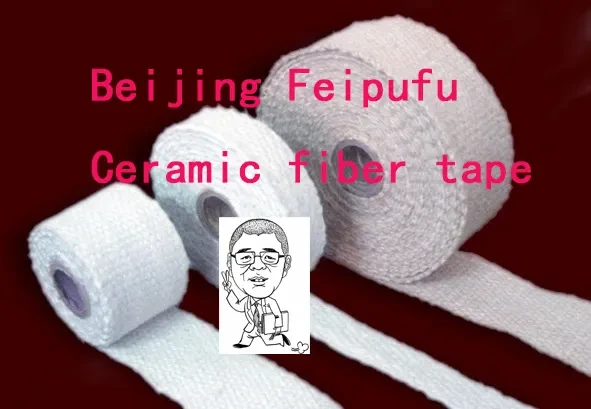
Ceramic Fiber Tape
Code prefix CT
Ceramic fiber tape is a much narrower cloth slit from the same ceramic fiber woven fabric, so its temperature class, chemistry and reinforcement are completely identical. The difference lies in handling: a narrow tape can wrap a thermocouple line or a small branch without cutting a full roll, while a wide tape covers a flange face in just two passes. Because the tape is thin, it serves as a wrapping material rather than a standalone barrier.
- Continuous
- 1000°C
- 1832 °F
- Short peak
- 1260°C
- 2300 °F
- Construction
- Wire reinforced
- CT
Spec sheets are issued against the confirmed grade, with the test method named on the report.
01 — Product description
Product description
The product can resist splash erosion from molten metals such as aluminum and zinc.
Product parameters
| Item | Value |
|---|---|
| Color | White |
| Short-term tolerance temperature | 1260°C |
| Fiber diameter | 3~5μm |
| Aluminum oxide (Al₂O₃) | 45~48% |
| Silicon dioxide (SiO₂) | 45~55% |
| Iron(III) oxide (Fe₂O₃) | 0.7~1.2% |
| Calcium oxide, sodium chloride (CaO&NaCl) | 0.43% |
| Moisture content | |
| Organic fiber content |
Note: The above chemical composition is the composition of the ceramic fiber base material.
Product specifications
| Item | Working Temperature (°C) | Tape Width (mm) | Thickness (mm) |
|---|---|---|---|
| Fiberglass reinforced | 650 | 30,40,50,60,70,75,80,100,120,150 | 2,3,5 |
| Metal wire reinforced | 1000 | ||
| Sintered tape (non-combustible) | 1000 |
Working condition suitability and restrictions
Different reinforcement materials of this product correspond to different continuous use temperatures. 1260°C is only the short-term tolerance temperature; long-term over-temperature operation is prohibited. The product can only withstand short-term splashing of molten aluminum and zinc, and cannot withstand continuous erosion or immersion by molten metal.
Usage precautions
- Cutting, processing, and installation of ceramic fiber material generate fiber dust. Maintain ventilation during operation, wear dust-proof protective equipment, and dispose of waste in accordance with local environmental regulations.
- The product contains a small amount of organic fiber. Initial high-temperature use may produce carbonization and smoking, which is a normal process characteristic and does not affect product performance.
- Use temperature should be matched according to reinforcement material. Over-temperature and over-working-condition use are strictly prohibited.
- During use, regularly inspect product condition. In case of powdering, damage, shrinkage, or failure, replace promptly.
- All technical data are for reference only. Actual performance depends on usage conditions. Users should conduct their own suitability testing and comply with relevant safety regulations and standards.
02 — Characteristics
Same cloth, different width
Slitting keeps the yarn, weave and reinforcement unchanged, so a tape specification can be lifted straight onto a roll order.
Layered wrapping
Two or three overlapping passes are normal where the surface is hot and access is tight; single-pass tape is a separator, not insulation.
Glass or wire
Glass reinforced tape suits dielectric wrapping; wire reinforced tape suits joints that see pulling and abrasion.
03 — Typical properties
Values typical, confirm against duty
| Test item | Value | Note |
|---|---|---|
| Colour | Natural, uncoated | |
| Continuous, glass | Glass filament reinforced | |
| Continuous, wire | SUS304 reinforced | |
| Short excursion | Both reinforcement types | |
| Thickness | Standard slit thicknesses | |
| Width | Standard slit widths |
04 — Standard sizes
| Product code | Dimensions |
|---|---|
| CT-G | Fiberglass reinforced, 650 C, width 30–150 mm, thickness 2, 3, 5 mm |
| CT-S | Metal wire reinforced, 1000 C, width 30–150 mm, thickness 2, 3, 5 mm |
| CT-SN | Sintered tape (non-combustible), 1000 C, width 30–150 mm, thickness 2, 3, 5 mm |
05 — Where it is used
- Flange and valve wrapping
- Thermocouple and instrument line protection
- Pipe branch insulation
- Sealing strip in furnace doors
- Gasket facing reinforcement
Service limits
- The tape is not self-adhesive; secure the tail with stainless wire or a clip.
- Leave a small loop where the joint moves instead of wrapping tight to the metal.
- Ask for heat-cleaned tape if the part will be painted after wrapping.
Related materials
View family
Ceramic Fiber Tape
CT