
Soluble Fiber Textiles
Soluble Fiber Cloth
Code prefix AC
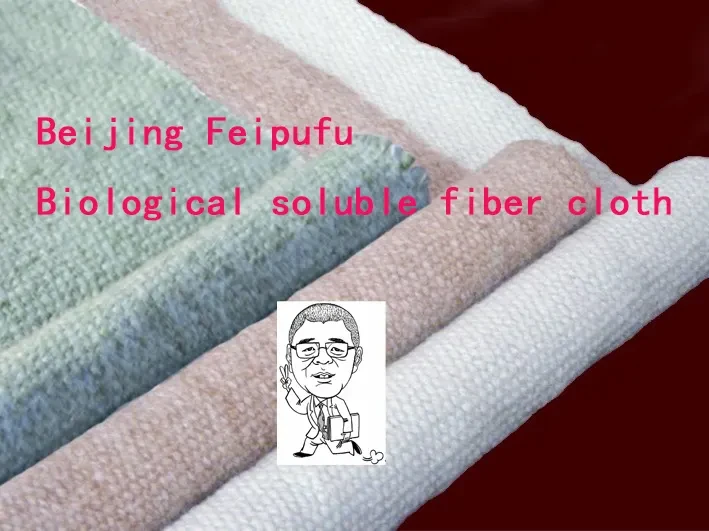
Bio-soluble fiber cloth is woven from AES (alkaline earth silicate) yarn. AES is an artificial vitreous silicate fiber that is not classified as a carcinogen under EU Directive 67/548 NOTA Q, and it is used as one alternative to refractory ceramic fiber in industrial and transport insulation. Glass reinforcement gives 650 C continuous service, wire reinforcement or sintering gives 1000 C, and the cloth takes a 1200 C short excursion.
- Continuous
- 1000°C
- 1832 °F
- Short peak
- 1200°C
- 2192 °F
- Construction
- Wire reinforced
- AC
Spec sheets are issued against the confirmed grade, with the test method named on the report.
01 — Product description
Why a soluble fiber
AES, alkaline earth silicate fiber, is an artificial vitreous silicate that is not classified as a carcinogen under EU Directive 67/548 NOTA Q. Projects that exclude refractory ceramic fiber for biopersistence reasons use AES textiles instead. The performance is close, but not identical, and the difference has to be stated rather than glossed over.
Glass reinforced AES cloth serves at 650 C continuous; wire reinforced or sintered cloth reaches 1000 C; all variants take a 1200 C short excursion. The cloth resists splash from aluminium and zinc, and the sintered version has already had its organic content burned out, which lowers smoke on first heat.
| Code | Thickness | Reinforcement | Continuous |
|---|---|---|---|
| AC2G | 2 mm | Glass | 650 C |
| AC3G | 3 mm | Glass | 650 C |
| AC2S | 2 mm | Wire | 1000 C |
| AC3S | 3 mm | Sintered | 1000 C |
Specification caution
Bio-soluble is not the same as hazard free. The fiber still requires dust controls during cutting, and it is not a drop-in replacement for every ceramic fiber grade. Where a project specifies RCF by name, substituting AES needs written agreement, because the approval may rest on the original material.
02 — Characteristics
Lower biopersistence
AES fiber is selected where the project specification asks for a non-RCF solution.
Splash resistance
The cloth withstands contact splash from aluminium and zinc.
Sintered option
Heat cleaning removes organic content for lower smoke on first heat.
03 — Typical properties
Values typical, confirm against duty
| Test item | Value | Note |
|---|---|---|
| Fiber | EU 67/548 NOTA Q | |
| Continuous, glass | Glass reinforced | |
| Continuous, wire | Wire or sintered | |
| Short excursion | Not a duty rating | |
| Fiber diameter | Spun staple | |
| Moisture | As delivered | |
| Organic content | Burns out on first heat |
04 — Standard sizes
| Product code | Dimensions |
|---|---|
| AC2G | 2 mm × 1000 mm, glass, 650 C |
| AC3G | 3 mm × 1000 mm, glass, 650 C |
| AC2S | 2 mm × 1000 mm, wire, 1000 C |
| AC3S | 3 mm × 1000 mm, sintered, 1000 C |
05 — Where it is used
- Industrial furnace curtains
- Marine and rail insulation
- Transport battery pack barriers
- Expansion joint covers
- Removable cover shells
Service limits
- Bio-soluble does not mean hazard free; apply the same dust controls as for other mineral fibers.
- Sintered cloth is stiffer and less tolerant of repeated folding.
- Confirm the project's fiber specification before substituting for ceramic fiber.
Related materials
View family
Soluble Fiber Cloth
AC