
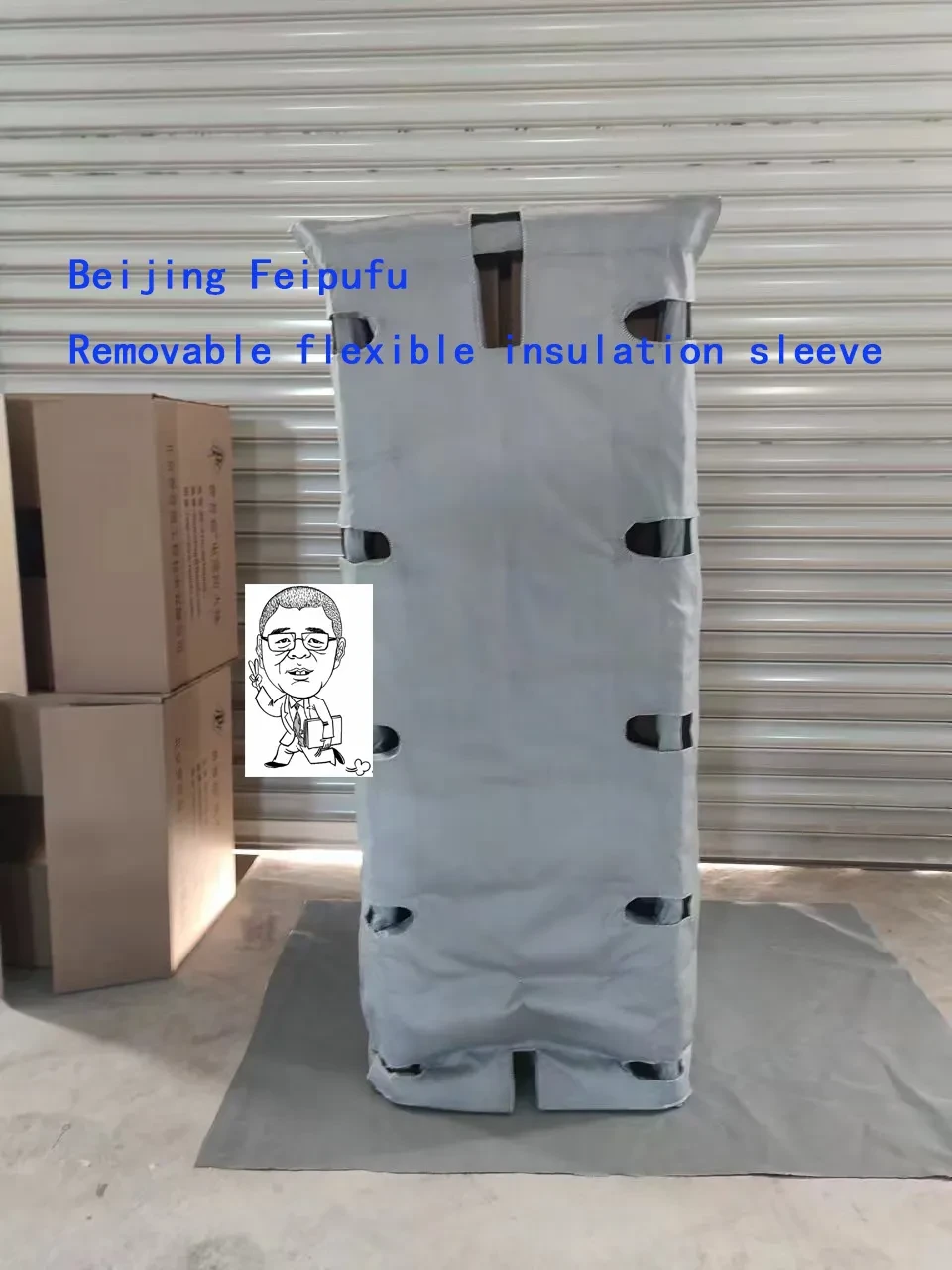
Flexible Fabricated Products
Removable Insulation Jacket
Code prefix RIJ
Removable flexible thermal insulation covers, also known as removable insulation jackets or flexible insulation blankets, use a multi-layer composite structure of an outer protective layer, a middle thermal insulation layer and an inner fitting liner. Each cover is fabricated from measurement, custom cutting and sewing, so it adapts to irregular equipment and pipelines, to multi-temperature-zone duty, and to equipment that is opened for maintenance, cleaning and servicing. The cover is reusable and provides energy savings in industrial thermal and cold insulation.
- Continuous
- 1000°C
- 1832 °F
- Short peak
- 1000°C
- 1832 °F
- Construction
- Unreinforced
- RIJ
Spec sheets are issued against the confirmed grade, with the test method named on the report.
01 — Product description
A sewn cover built from a measurement, not a nominal size
Removable flexible thermal insulation covers, also known as removable insulation jackets or flexible insulation blankets, use a multi-layer composite structure of an outer protective layer, a middle thermal insulation layer and an inner fitting liner. Each cover is fabricated through measurement, custom cutting and sewing against the actual configuration and operating conditions of the equipment and pipelines on site, so it adapts to irregular shapes and to multi-temperature-zone duty. It suits systems that have to be opened for maintenance, cleaning and servicing, is reusable, and provides energy savings as a supporting material in industrial thermal and cold insulation.
| Item | Value |
|---|---|
| Thermal conductivity | 0.035 – 0.045 W/m·K at room temperature (±0.005) |
| Temperature range | -70 C to 1000 C |
| Flame retardant grades | Class A and Class B1 to GB 8624-2012 |
| Density | 110 – 220 kg/m³ |
| Standard thickness | 10 – 150 mm, non-standard on request |
Temperature types
- Cold preservation type: low-temperature refrigeration and constant-temperature cold preservation.
- Low-temperature type: conventional warm conditions at 300 C and below.
- Medium-temperature type: industrial conditions from 300 C to 600 C.
- High-temperature type: thermal conditions from 600 C to 1000 C.
Core performance
- Good insulation across a wide range, from -70 C to 1000 C.
- Chemical stability with optional insect, mildew, aging and weather resistance.
- Class A and Class B1 flame retardant grades to national standard requirements.
- Waterproof and moisture proof against conventional water vapour exposure.
- Effective heat and cold retention, reducing energy loss and improving efficiency.
- Flexible and tough, conforming closely to irregular equipment and pipe curves.
- Easy to remove and refit, reducing interference with maintenance and cleaning.
- Reusable with a long service life and low overall cost.
- Customisable sizes and configurations for non-standard equipment.
- Smooth, wipeable surface that keeps the plant looking tidy.
- Blocks high surface temperatures and reduces the risk of contact burns.
Classification by function
- Internal temperature preservation: blocks external convection, reduces radiation and conductive exchange, stabilising process temperature.
- External thermal radiation protection: blocks strong external radiation and conduction to protect components and instruments.
- Anti-freeze: resists external low temperature and protects equipment, pipelines and instruments from freeze damage.
- Low-temperature cold preservation: blocks external heat transfer and maintains the internal low-temperature environment.
Applications
- Pipes, elbows, flanges, valves, tees and sight glasses.
- Reactors, heat exchangers, pump bodies, equipment heads and unit cabinets.
- Steam turbines, gas turbines, engine exhaust pipes and injection moulding machines.
- Instrument boxes and precision equipment in high-temperature areas.
- HVAC, refrigeration equipment and pipelines.
Usage precautions
- Install and remove along the preset opening direction; violent pulling and forced disassembly damage the sewn structure and surface layer.
- Avoid contact with sharp or hooked objects that puncture the fabric or detach the insulation layer.
- A flexible insulation auxiliary material for conventional dry static conditions; not resistant to strong acid or alkali, high-speed airflow erosion or continuous open flame.
- All technical data are for reference only; performance is affected by site conditions, installation and environment.
- Inspect fabric, stitching and insulation regularly and replace promptly when damaged, aged or detached.
02 — Characteristics
Four temperature types
Cold preservation, low temperature up to 300 C, medium temperature 300–600 C, and high temperature 600–1000 C.
Flame retardant options
Class A and Class B1 grades to GB 8624-2012, with insect, mildew, aging and weather resistance available.
Made to the equipment
Measured, cut and sewn for irregular shapes, with high conformity on curves and fittings.
Reusable and serviceable
Opened along the preset direction for maintenance, cleaning and servicing, then refitted.
03 — Typical properties
Values typical, confirm against duty
| Test item | Value | Note |
|---|---|---|
| Temperature range | By type | |
| Conductivity | Room temperature, ±0.005 | |
| Flame retardant | GB 8624-2012 | |
| Density | By build | |
| Thickness | Non-standard on request | |
| Structure | Multi-layer composite |
04 — Standard sizes
| Product code | Dimensions |
|---|---|
| RIJ-COLD | Cold preservation type, to survey |
| RIJ-LOW | Low temperature type, up to 300 C |
| RIJ-MID | Medium temperature type, 300–600 C |
| RIJ-HIGH | High temperature type, 600–1000 C |
05 — Where it is used
- Pipes, elbows, flanges, valves, tees and sight glasses
- Reactors, heat exchangers, pump bodies and equipment heads
- Steam turbines, gas turbines, exhaust pipes and injection moulding machines
- Instrument boxes and precision equipment in hot areas
- HVAC, refrigeration equipment and pipelines
Service limits
- A flexible insulation auxiliary material for conventional dry static conditions; not resistant to strong acid or alkali, high-speed airflow erosion or continuous open flame.
- Open and close along the preset direction; do not pull violently or force the sewn structure.
- Avoid contact with sharp or hooked objects that puncture the fabric or detach the insulation layer.
- Inspect fabric, stitching and insulation at intervals and replace when damaged, aged or detached.
Related materials
View family
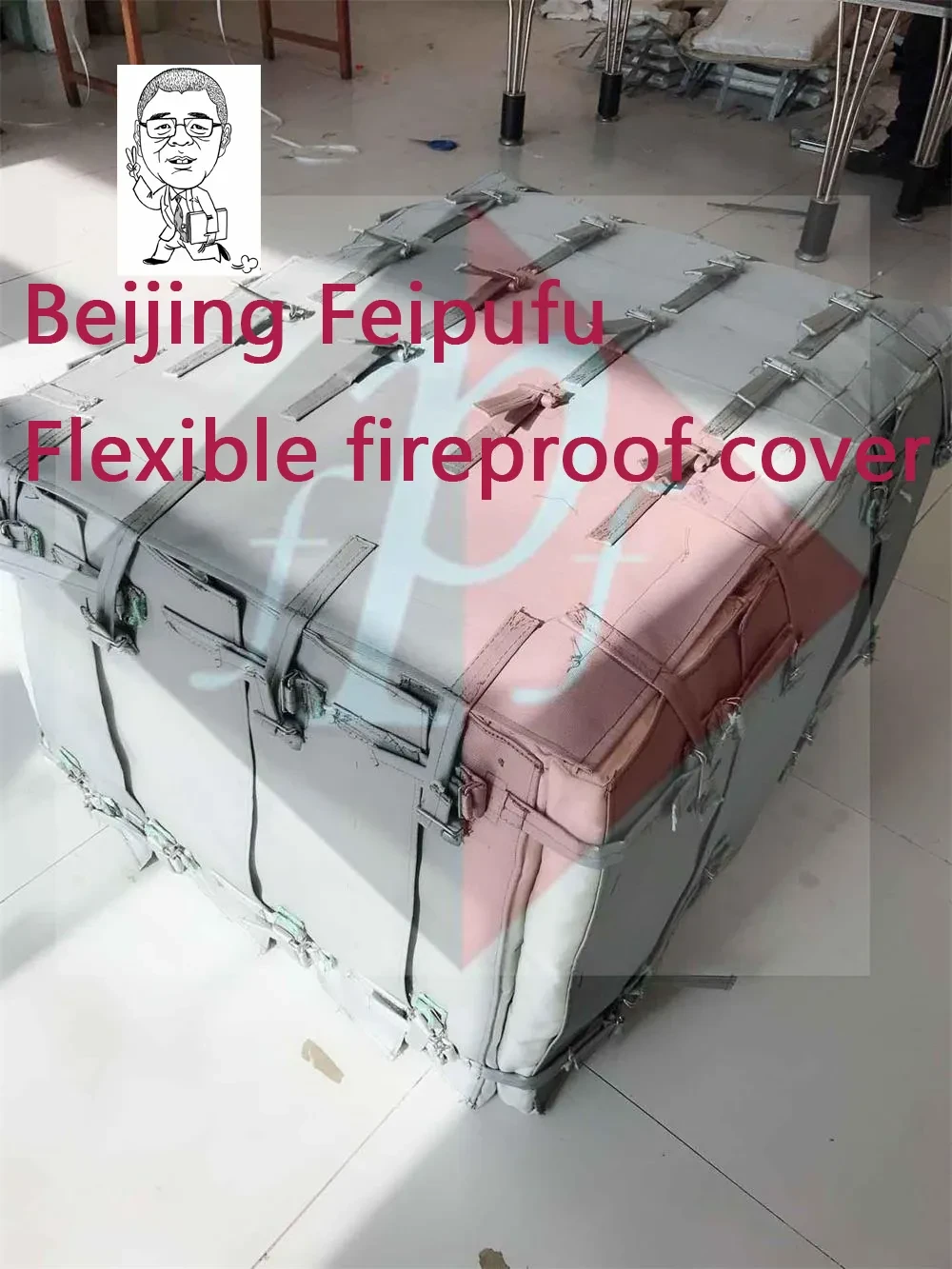

Removable Insulation Jacket
RIJ