
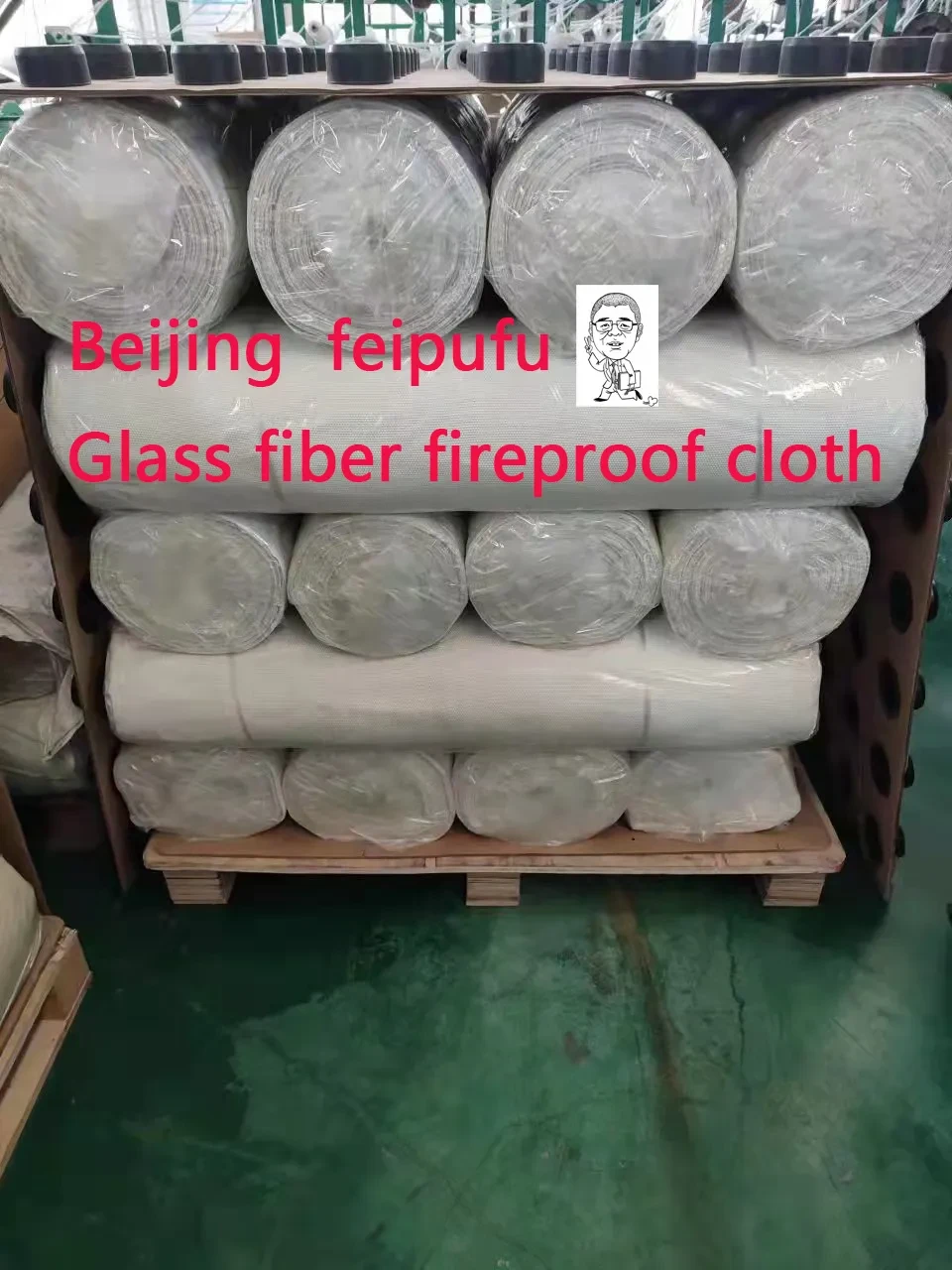
Fiberglass Textiles
Fiberglass Cloth
Code prefix GC
Fiberglass cloth is woven from E-glass yarn and supplied with or without a heat-cleaning treatment. It is the dielectric option in the range: 550 C short term, 500 C continuous, with predictable tensile and electrical behaviour. It is not a refractory material and should not be specified where molten metal or direct flame contact is expected.
- Continuous
- 500°C
- 932 °F
- Short peak
- 550°C
- 1022 °F
- Construction
- Unreinforced
- GC
Spec sheets are issued against the confirmed grade, with the test method named on the report.
01 — Product description
The dielectric member of the range
E-glass cloth is the material to choose when the job is electrical separation or thermal lagging below 500 C. Its tensile and dielectric behaviour are well documented, which makes mechanical design straightforward. It is not a refractory material, and specifying it where molten metal or direct flame contact is expected is a common and avoidable error.
The range is supplied as bulked or flat cloth. Bulked yarn gives a thicker, softer cloth with more trapped air for thermal work; flat yarn gives a thin, dense cloth for wrapping and coating. Thickness, width and weight are quoted per cloth code, and the standard ±10% production tolerance applies to all three.
| Code | Thickness | Weight | Weave | Yarn |
|---|---|---|---|---|
| GC0.6 | 0.6 mm | 610 g/m² | Plain | Bulked |
| GC0.8 | 0.8 mm | 680 g/m² | Plain | Bulked |
| GC1.2 | 1.2 mm | 850 g/m² | Plain | Bulked |
| GC1.4 | 1.4 mm | 1000 g/m² | Plain | Bulked |
| GC1.7 | 1.7 mm | 1200 g/m² | Plain | Bulked |
| GC2.0 | 2.0 mm | 1300 g/m² | Plain | Bulked |
| GC3.0 | 3.0 mm | 2000 g/m² | Twill | Bulked |
| GC200 | 0.19 mm | 204 g/m² | Plain | Flat |
| GC430 | 0.43 mm | 430 g/m² | Twill | Flat |
| GC650 | 0.6 mm | 650 g/m² | Satin | Flat |
Handling
- Cut edges fray; heat seal or overlock where the part is handled repeatedly.
- Store dry; moisture lowers dielectric performance until the cloth is dried out.
- Wear gloves and respiratory protection when cutting or machining.
- Do not confuse 550 C short excursion with a continuous rating.
02 — Characteristics
Dielectric
E-glass keeps its insulating behaviour dry and is used as a separator in electrical assemblies.
Predictable strength
Tensile properties are stable and well documented, which simplifies mechanical design.
Heat cleaned option
Starch and sizing can be burned off for lower smoke and better coating adhesion.
03 — Typical properties
Values typical, confirm against duty
| Test item | Value | Note |
|---|---|---|
| Yarn | Untexturised or bulked | |
| Continuous | Static duty | |
| Short excursion | Not a duty rating | |
| Weave | Selected by drape | |
| Thickness | Ten standard cloths | |
| Weight | By cloth code | |
| Finish | Cleaned for coating |
04 — Standard sizes
| Product code | Dimensions |
|---|---|
| GC0.6 | 0.6 mm × 1000 mm, plain, bulked, 610 g/m², 100 m |
| GC0.8 | 0.8 mm × 1000 mm, plain, bulked, 680 g/m², 50 m |
| GC1.2 | 1.2 mm × 1000 mm, plain, bulked, 850 g/m², 50 m |
| GC1.4 | 1.4 mm × 1000 mm, plain, bulked, 1000 g/m², 50 m |
| GC1.7 | 1.7 mm × 1000 mm, plain, bulked, 1200 g/m², 30 m |
| GC2.0 | 2.0 mm × 1000 mm, plain, bulked, 1300 g/m², 30 m |
| GC3.0 | 3.0 mm × 1000 mm, twill, bulked, 2000 g/m², 30 m |
| GC200 | 0.19 mm × 1270 mm, plain, flat, 204 g/m², 200 m |
| GC430 | 0.43 mm × 1000 mm, twill, flat, 430 g/m², 100 m |
| GC650 | 0.6 mm × 1000 mm, satin, flat, 650 g/m², 100 m |
05 — Where it is used
- Electrical insulation barriers
- Pipe and duct lagging
- Expansion joint fabric
- Base cloth for silicone coating
- Composite and laminate reinforcement
Service limits
- Not a refractory cloth; do not use against molten metal or open flame.
- Cut edges fray; heat seal or overlock where handling is repeated.
- Wear gloves and respiratory protection when cutting.
Related materials
View family

Fiberglass Cloth
GC